Practical phrase
How to Say “No, Thank You” in Korean Naturally
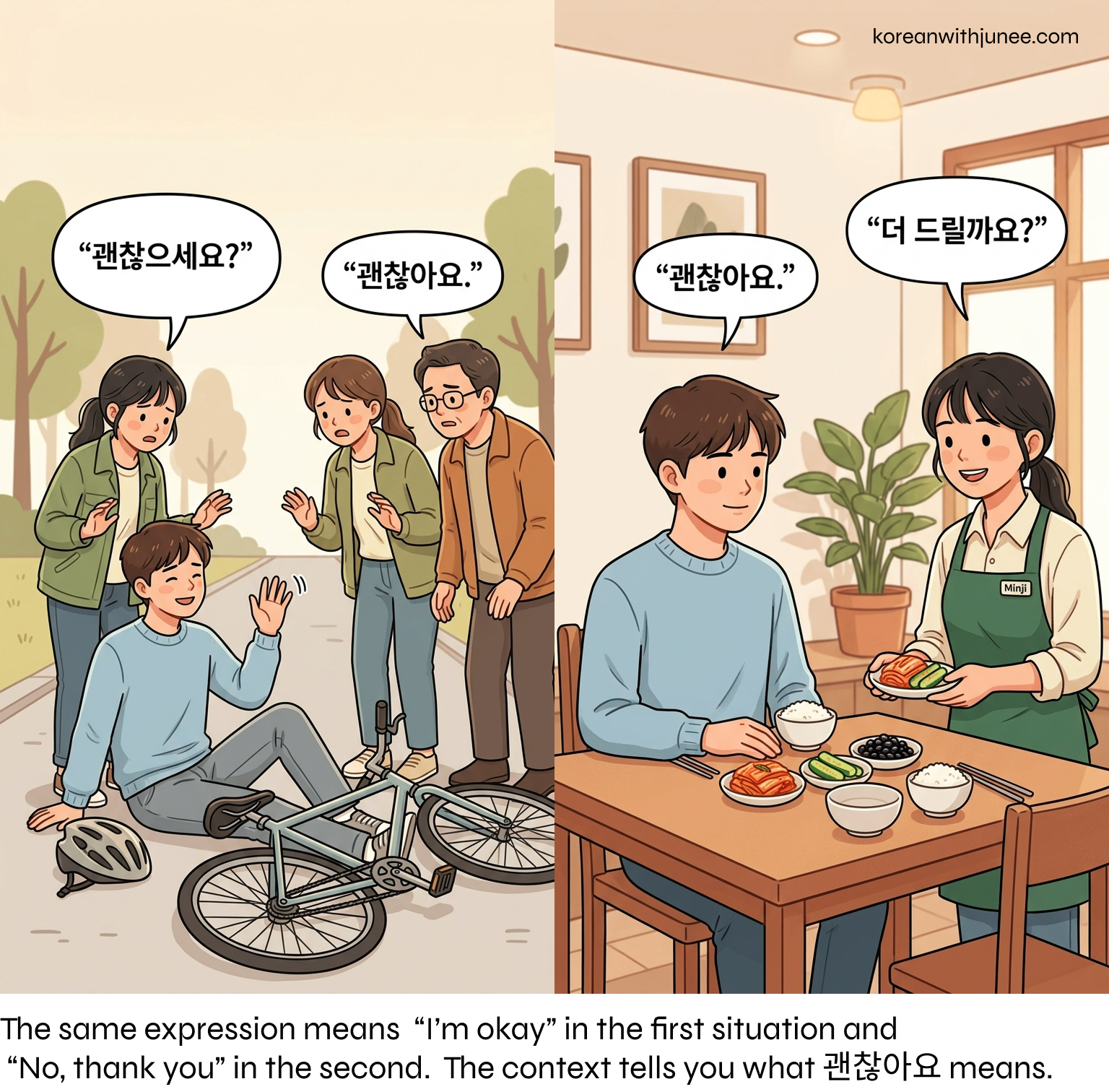
Learn how 괜찮아요 naturally and politely communicates “No, thank you” in Korean.
Learn how 괜찮아요 naturally and politely communicates “No, thank you” in Korean.
What Does 괜찮아요 Mean?
The most natural way to say “No, thank you” in Korean is 아니요, 괜찮아요 (aniyo, gwaenchanayo).
Although 괜찮아요 literally means “I’m okay” or “It’s alright,” Koreans often use it to politely decline an offer.
When my boyfriend visited Korea, he tried to politely decline something my mother offered. He said:
It was a word-for-word translation of “No, thank you.”
We understood what he meant, but it sounded like an English sentence translated directly into Korean. In that situation, Koreans would more naturally say 괜찮아요 or 아니요, 괜찮아요.
In a more formal situation, you can say 괜찮습니다.
- 아니, 감사합니다.
- No, thank you.
How Can 괜찮아요 Mean Both “Okay” and “No”?
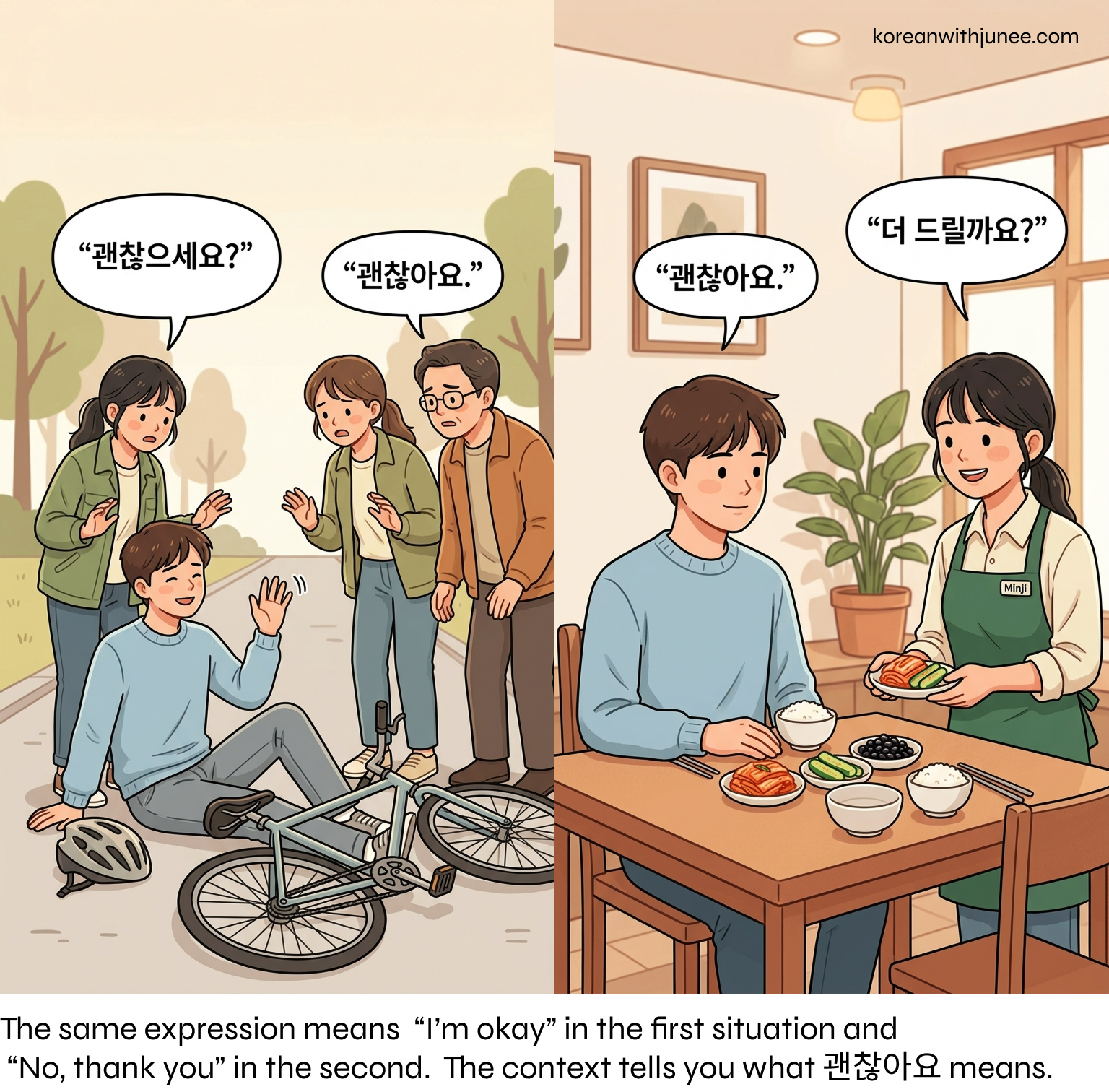
괜찮아요 does not literally mean “no.” Its basic meaning is “to be okay” or “to be all right.”
However, when someone offers you something, saying “I’m okay” naturally communicates that you do not need it. In that situation, 괜찮아요 works like “No, thank you.”
Here, 괜찮아요? means “Are you okay?”
Now imagine that someone offers you more coffee. Here, 괜찮아요 communicates that you do not need any more coffee.
The word itself does not completely change its meaning. The situation tells you what the speaker means.
- 다쳤어요? 괜찮아요?
- Are you hurt? Are you okay?
- 커피 더 드릴까요?
- Would you like some more coffee?
- 아니요, 괜찮아요.
- No, thank you. I’m okay.
Let’s Make It Simple
Imagine you’re at a coffee shop. A staff member asks:
If you don’t want any syrup, you can say:
Here’s another familiar situation.
You’re looking around a store when a staff member approaches you and asks:
If you’re just browsing, you can say:
- 시럽 추가해 드릴까요?
- Would you like some syrup in your coffee?
- 아니요, 괜찮아요.
- No, thanks. I’m okay without it.
- 도움 필요하세요?
- Do you need any help?
- 찾으시는 거 있으세요?
- Are you looking for anything in particular?
- 괜찮아요. 그냥 보고 있어요.
- No, thanks. I’m just looking.
Can You Say 아니요, 감사합니다?
아니요, 감사합니다 is not grammatically wrong, and Koreans will understand you.
However, when you are politely declining an offer, 아니요, 괜찮아요 usually sounds more natural.
If you want to politely decline while also thanking the person, you can say:
For Korean beginners, 아니요, 괜찮아요 is the safest and most useful expression to remember.
- 아니요, 감사합니다.
- No, thank you.
- 아니요, 괜찮아요.
- No, I’m okay.
- 아니요, 괜찮아요. 감사합니다.
- No, I’m okay. Thank you.
Depending on the context, 괜찮아요 can mean:
I’m okay.
It’s okay.
No, thank you.
And that’s it!
You’ve just learned one of the most useful ways to politely refuse something in Korean!